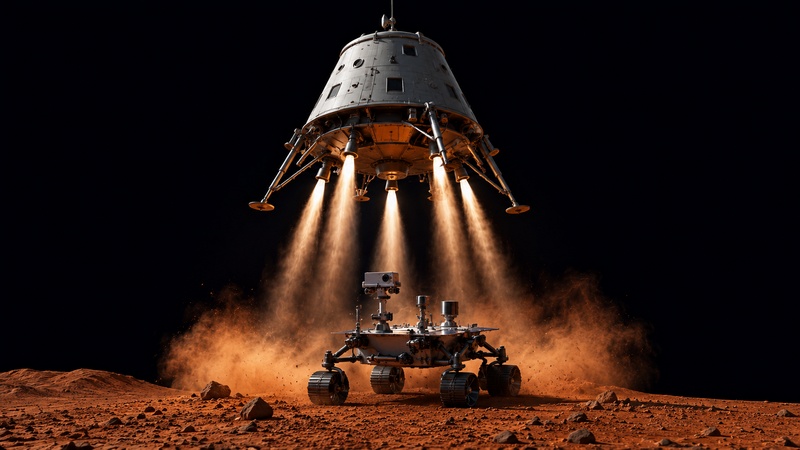
There is something uniquely mesmerizing about Mars. It is not just the proximity to Earth or the striking crimson hue that defines its visage in the night sky. Mars represents the next giant leap for humanity, the ultimate frontier in our quest to understand the solar system and, potentially, find evidence of past or present life beyond our home world. For decades, space agencies globally have dispatched robotic emissaries to study its rugged terrain, thin atmosphere, and complex history. Now, with the 3D Mars Explorer & Rover Landing Simulator, enthusiasm meets education, allowing users to step into the virtual shoes of mission controllers and planetary scientists.
This simulator provides an unparalleled opportunity to visualize and interact with the Martian environment in vivid detail. It moves beyond static imagery, offering a dynamic platform where the intricacies of orbital mechanics, atmospheric entry, and surface operations converge. By bridging the gap between raw scientific data and interactive visualization, this tool serves as a critical reference for understanding the challenges and triumphs of real-world Red Planet missions. This text aims to guide users through the scientific principles, historical context, and operational considerations that underpin the simulated experience, ensuring a richer, more informed exploration.
Contents
The Cradle of Exploration: Understanding the Martian Environment
To successfully navigate Mars, one must first comprehend its unique environmental characteristics. Mars is a world of extremes, boasting the largest volcanoes in the solar system, deepest canyons, and polarized ice caps. While it shares some similarities with Earth, such as a similar day length, known as a sol, which is 24 hours and 39 minutes, it is fundamentally distinct. The thin atmosphere, composed primarily of carbon dioxide, offers scant protection from solar radiation and creates massive dust storms that can obscure the entire planet for weeks. Surface temperatures swing wildly, often plunging far below freezing even at the equator during summer nights. Understanding these variables is not just academic; it is essential for calculating aerodynamic drag during descent and predicting power generation for solar-dependent vehicles on the surface.
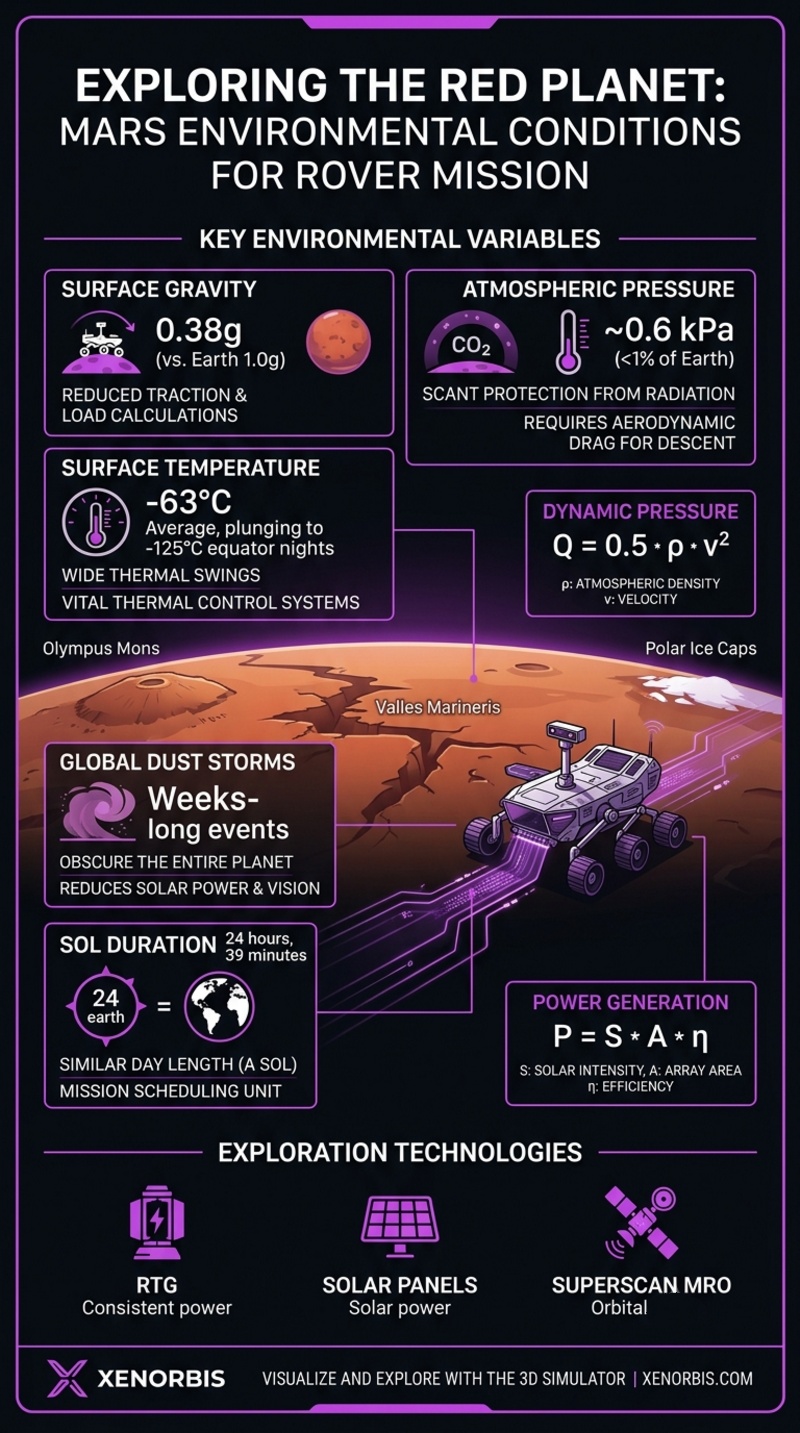
Table 1: Planetary Comparison — Earth vs. Mars
| Characteristic | Earth (Reference) | Mars (Target Planet) |
|---|---|---|
| Average Distance from Sun | 149.6 million km (1 AU) | 227.9 million km (1.52 AU) |
| Equatorial Radius | 6,378 km | 3,396 km (approx. 53% of Earth) |
| Surface Gravity | 9.81 m/s2 (1g) | 3.71 m/s2 (approx. 0.38g) |
| Atmospheric Pressure | ~101.3 kPa (sea level) | ~0.6 kPa (less than 1% of Earth) |
| Primary Atmospheric Gas | Nitrogen (~78%), Oxygen (~21%) | Carbon Dioxide (~95%) |
| Average Surface Temperature | ~15°C | ~-63°C |
| Moons | 1 (The Moon) | 2 (Phobos, Deimos) |
Operational Phases of the Simulation: From Orbit to Touchdown
The 3D Mars Explorer & Rover Landing Simulator is logically structured into distinct operational modes, reflecting the real-world progression of a deep space mission. These phases challenge users to understand different aspects of planetary physics and engineering. Effective management of each stage is crucial for mission success.
- Orbital Insertion and Planet Overview: Before attempt a descent, orbital mechanics dictate the trajectory. Real spacecraft enter highly elliptical orbits initially, gradually circularizing them through aerobraking, a technique utilizing atmospheric drag. In this phase, users observe the planet broadly, identifying global weather patterns, major topographical features, and potential landing zones based on latitude, elevation, and scientific interest. Key parameters include the orbital velocity, which must be precisely calculated to avoid skipping off the atmosphere or burning up due to excessive friction. A simple formula for gravitational force, F, at a distance, r, involves the gravitational constant, G, and the masses, M1 and M2: F = G * (M1 * M2) / r2.
- Atmospheric Entry, Descent, and Landing (EDL): Often referred to as the seven minutes of terror, EDL is undoubtedly the most critical segment. Spacecraft must deplete thousands of kilometers per hour of velocity in a very short span. The process leverages aerodynamic drag from the heat shield initially, followed by supersonic parachute deployment. Velocity decreases significantly during these stages. The dynamic pressure, Q, experienced by the craft depends on atmospheric density, ρ, and velocity, v: Q = 0.5 * ρ * v2. Navigating peak heating and decelerations is paramount. In the final seconds, advanced systems like the Skycrane maneuver, employed by Curiosity and Perseverance, utilize retro-rockets for a controlled descent, gently lowering the rover via tethers before flying away to impact at a safe distance.
- Surface Mobility and Science Operations: Once wheels touch Martian soil, the exploration truly begins. In this mode, the simulator emphasizes navigating complex topography while managing resources such as power, thermal constraints, and communication windows with Earth. Rover drivers do not operate in real-time, due to signal latency ranging from 4 to 24 minutes. Instead, they upload sequences of commands, relying on autonomy for hazard avoidance. Objectives involve traveling to high-value targets, deploying robotic arms for sample analysis, and maximizing scientific return over the duration of the sol. Efficiency in power management is crucial, with total energy, E, calculated from power, P, and time, t: E = P * t.
The Evolution of Martian Rovers: A Reference for Simulated Exploration
Humanity’s robotic presence on Mars has evolved dramatically, from simple technology demonstrators to complex mobile laboratories. Each mission has built upon the successes and lessons of its predecessors. The rovers included in the simulator represent different eras of space technology, each with unique capabilities and operational constraints.
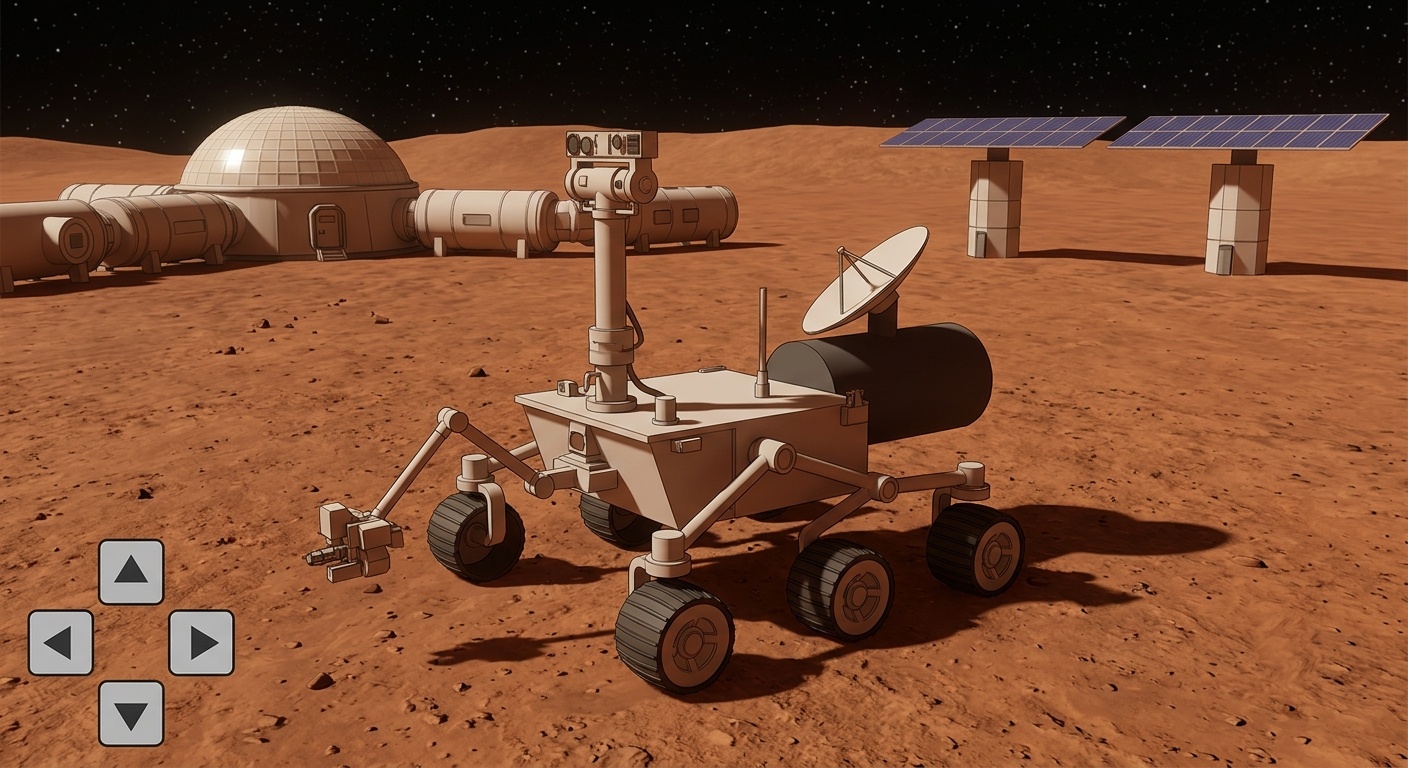
Sojourner: The Pioneer
Launched with the Mars Pathfinder mission in 1997, Sojourner was the first successful rover on another planet. It was tiny, barely larger than a microwave oven, and operated for 83 sols. Its primary objective was to validate mobile exploration concepts. In the simulation, Sojourner represents the baseline for mobility, requiring careful navigation around even small rocks that larger vehicles would simply roll over. Its science complement was minimal, focusing on alpha proton X-ray spectrometer analysis of nearby rocks.
Spirit and Opportunity: The Geologists
Arriving in 2004, the twin Mars Exploration Rovers (MER) were vastly larger and more robust than Sojourner. Solar-powered and designed for 90-sol missions, they far exceeded expectations. Spirit operated until 2010, while Opportunity continued exploration until 2018, famously traversing over 45 kilometers across the Meridiani Planum. These rovers proved that water once flowed on the Martian surface. In the simulator, the MER class offers a compelling balance of mobility, scientific tools, and resource management, particularly concerning solar array dust accumulation and winter thermal survival.
Curiosity and Perseverance: The Analytical Chemists and Astrobiologists
The Mars Science Laboratory, Curiosity, landed in 2012 in Gale Crater, revolutionizing rover design. This car-sized behemoth utilizes a Radioisotope Thermoelectric Generator (RTG) rather than solar panels, providing consistent power regardless of weather or season. Perseverance, its near-twin, landed in 2021 in Jezero Crater, specifically tasked with seeking signs of ancient microbial life and caching samples for future return missions. These vehicles utilize complex landing sequences and carry advanced analytical suites. Their simulation models reflect massive robotic arms, sophisticated imaging systems, and powerful lasers, enabling advanced geological and chemical studies over immense distances.
Table 2: Comparison of Major Mars Rover Specifications
| Mission / Rover | Mass | Power Source |
|---|---|---|
| Mars Pathfinder / Sojourner (1997) | ~11.5 kg | Solar Panel + Non-rechargeable Battery |
| Mars Exploration Rover / Spirit & Opportunity (2004) | ~185 kg | Solar Array + Rechargeable Batteries |
| Mars Science Laboratory / Curiosity (2012) | ~899 kg | Multi-Mission Radioisotope Thermoelectric Generator (MMRTG) |
| Mars 2020 / Perseverance (2021) | ~1,025 kg | MMRTG |
| ExoMars / Rosalind Franklin (Future) | ~310 kg | Solar Array + Radioisotope Heating Units |
Martian Topography and Science Objectives: Navigating the Simulation
🌕 Mars possesses a diverse geological tapestry that directs mission planning and simulated exploration. The distinction between Martian hemispheres is particularly striking. The southern hemisphere is heavily cratered and ancient, resembling the lunar highlands, while the northern hemisphere is largely comprised of smooth plains with significantly lower elevation. Real-world landing sites are often chosen in low-lying areas in the north, such as Vastitas Borealis, to maximize the atmospheric column available for deceleration during EDL. Science planning, however, frequently targets the boundary regions or ancient river deltas, where the search for past habitable environments is most promising.
Within the simulator, users interact with detailed models of iconic Martian landmarks. Navigating these features requires appreciating scale, slope stability, and scientific potential. The geology dictates the mission path, pushing rovers to investigate rock outcrops, hematite-rich regions known as blueberries, clay mineral deposits, and layered sedimentary structures that preserve records of Mars’ warmer, wetter past. Driving is a strategic endeavor; an improper approach to a dune can entrap the vehicle, mirroring Spirit’s fate in 2009 at the Troy site. Scientific productivity often hinges on reaching specific geologic units or sampling varied materials. Thermal inertia, which measures how quickly materials heat up or cool down, is key to differentiating loose sand from solid rock, often informing traversability.
Table 3: Significant Martian Surface Features and Landing Sites
| Feature Name | Type / Significance | Related Mission |
|---|---|---|
| Olympus Mons | Massive Shield Volcano (Largest in Solar System) | Orbiters (MRO, Mars Express) |
| Valles Marineris | Immense Canyon System | Orbiters |
| Gale Crater / Mount Sharp | Impact Crater with Sedimentary Mound | Curiosity |
| Jezero Crater | Impact Crater with Ancient Delta Structure | Perseverance |
| Meridiani Planum | Smooth Plain with Hematite Deposits | Opportunity |
| Gusev Crater | Large Crater (Possible Ancient Lakebed) | Spirit |
| Planum Australe | Southern Polar Cap region | Orbiters (Study of Water and CO2 Ice) |
Deep Space Communication and Signal Latency
🌎 A fundamental constraint in Mars exploration is the immense distance to Earth, causing significant delays in data transmission. In the simulation’s Rover Mode, this reality dictates operational protocols. Real-time driving is impossible, which is why rovers utilize complex computer vision and autonomous path planning. The standard workflow involves mission planners on Earth reviewing images and data from the previous sol, creating a new sequence of commands, and transmitting them during specific communication windows.
These windows are brief, typically occurring when Earth is in direct view or, more commonly, when a Mars telecommunications relay arbiter, such as the Mars Reconnaissance Orbiter (MRO) or MAVEN, passes overhead. The orbiters act as high-speed intermediaries, receiving UHF transmissions from rovers and beaming them back to Earth via high-gain X-band antennas. Bandwidth is limited. Prioritizing critical telemetry and the highest-value scientific data is essential. Factors influencing signal quality include solar interference and the planet Overview geometry. In communication calculations, signal strength decreases according to the inverse-square law, similar to gravitational force: Strength ∝ 1 / r2. Users must plan surface maneuvers carefully, ensuring vehicles do not enter shadowed regions where communication is impossible for extended periods.
Power Systems and Thermal Management: Sol vs. RTG
Energy is the lifeblood of any space exploration vehicle. Without electricity, scientific instruments fail, mobility stops, and communication ceases. Furthermore, maintaining optimal thermal control is vital to prevent sensitive electronics from freezing during harsh Martian nights. The 3D Mars Explorer & Rover Landing Simulator accurately models different power systems and their associated management challenges, providing users with a realistic operational experience.
- Solar Power (Sojourner, MER Class): These rovers rely entirely on solar panels to generate power during the day and charge rechargeable batteries for nighttime operations. Their lifespan and daily capability are directly tied to solar luminosity, which varies seasonally and latitudinally. Dust accumulation on the arrays can progressively reduce power output. A famous exception was when unexpected wind gusts, or cleaning events, cleared the MER arrays, significantly extending their missions. In the simulation, solar-powered vehicles require strategic planning, especially during winter sols with lower solar angles, when energy must be prioritized for heating rather than driving or science. Total power available, Pavail, depends on solar intensity, S, array area, A, and efficiency, η: Pavail = S * A * η.
- Nuclear Power (Curiosity, Perseverance): Real spacecraft use Multi-Mission Radioisotope Thermoelectric Generators (MMRTG). These devices convert the heat generated by the natural radioactive decay of Plutonium-238 directly into electricity. While the total power output is relatively low, typically around 110 watts initially, it is extremely reliable and consistent, functioning day and night, through massive dust storms, and regardless of season. Waste heat from the decay process is also circulated through the rover via fluid loops to keep vital components warm, simplifying thermal management. While the power output degrades slightly each year, it provides immense operational flexibility. The simulation of these heavy rovers focuses less on seasonal energy constraints and more on managing the instantaneous power draw of complex science tools. Total generated power, Pgen, at time t follows exponential decay based on initial power, P0, and half-life decay constant, λ: Pgen(t) = P0 * e-λt.
The Search for Life: Martian Astrobiology in Context
The overarching theme driving almost all robotic exploration of Mars, and a significant objective reflected in the simulation’s scientific goals, is the search for evidence of life. Real missions do not necessarily expect to find extant organisms on the surface today, due to the harsh radiation environment and extreme aridity. Instead, the focus is on astrobiology — understanding the origin, evolution, and potential distribution of life in the universe. Specifically, scientists are looking for biosignatures, chemical or textural traces that ancient life might have left behind in layered sedimentary rocks, organic molecules, or mineral deposits formed in presence of liquid water.
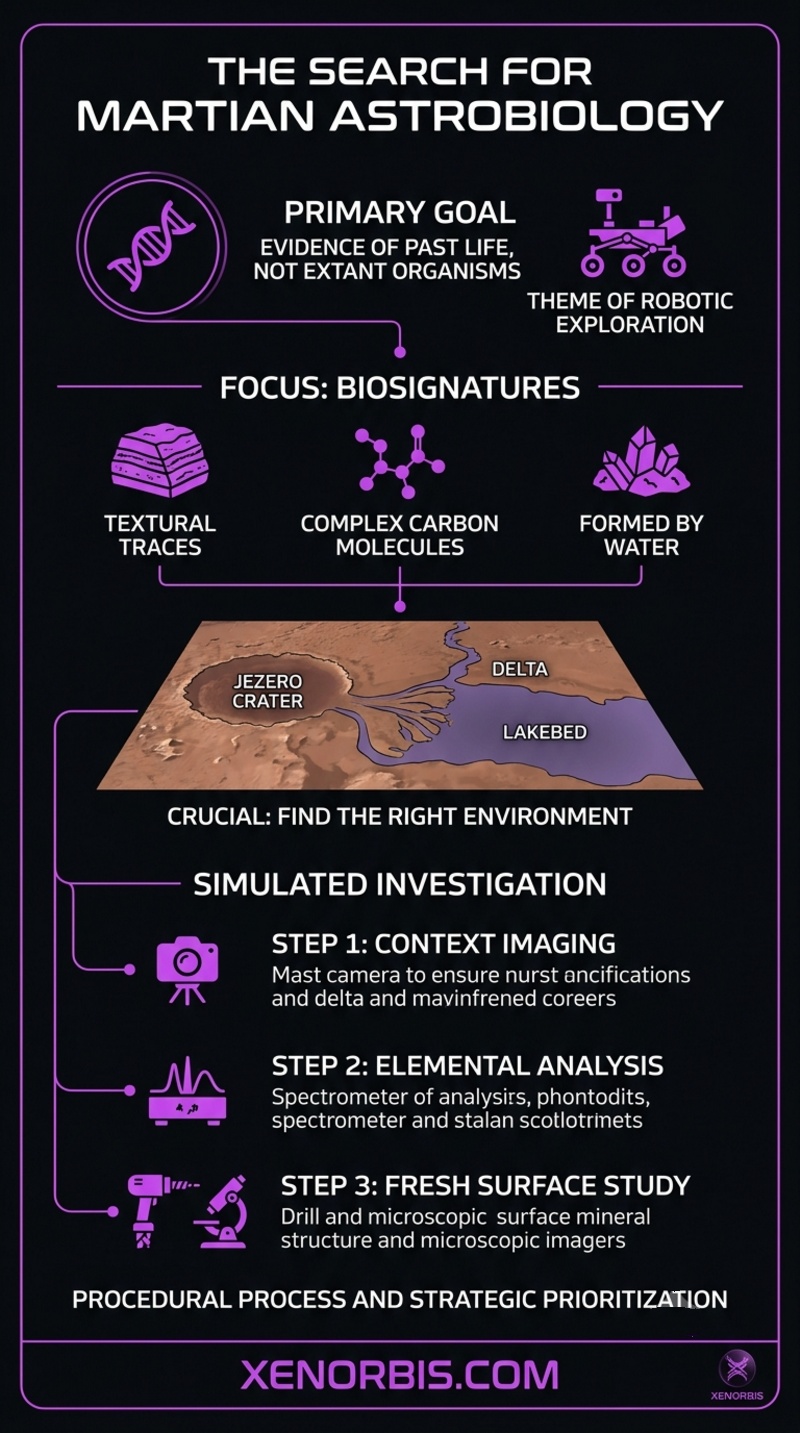
In the virtual landscape, users navigate to geological sites designated as astrobiological targets. Effective investigation mirrors real methodologies: taking high-resolution context images with mast-mounted cameras, analyzing elemental composition with spectrometers, and deploying microscopic imagers or drills on robotic arms to study fresh surfaces. Understanding the principle of finding the right environment is crucial. Real robotic emissaries look for evidence of complex organic carbon molecules in preserved lakebeds, much like Perseverance in Jezero Crater. While the simulator does not provide definitive biogenic analysis, it illustrates the procedural process and strategic prioritization required in astrobiological research.
Glossary of Key Terms
| Term | Description |
|---|---|
| Aeroassisted descent | Utilizing atmospheric drag via heat shields or parachutes to decelerate a spacecraft during EDL. |
| Aerobraking | Using a planet’s atmospheric drag to gently reduce orbital altitude over multiple passes. |
| Azimuth | Horizontal angle measured clockwise from the North. Crucial for navigation. |
| biosignature | Any substance or phenomenon that provides scientific evidence of past or present life. |
| EDL | Entry, Descent, and Landing. The complex sequence required for touchdown. |
| Hematite blueberries | Small iron-rich spheres found by Opportunity, indicating past presence of liquid water. |
| Inertial navigation | Calculating position based on accelerometers and gyroscopes when external references like GPS are unavailable. |
| Luminosity | The total amount of energy emitted by a star per unit time. Affects solar power generation. |
| MMRTG | Multi-Mission Radioisotope Thermoelectric Generator. Nuclear power source used on MSL and M2020. |
| Oblate Spheroid | A sphere that is slightly flattened at the poles. Mars’ shape is noticeably non-spherical. |
| Orbiters | Spacecraft that study planets from orbit and often act as communications relays for rovers. |
| Paleolake | An ancient, now-dry lake. Craters with paleolake structures are prime targets for astrobiology. |
| Radio Latency | The time delay in communication with Earth due to the finite speed of light across space. |
| Regolith | The layer of loose, heterogeneous superficial deposits covering solid rock on planetary surfaces. |
| Skycrane | The innovative powered descent system used to land Curiosity and Perseverance.” |
| Sol | A Martian solar day. Approximately 24 hours, 39 minutes, 35 seconds. |
| Spectrometry | Technique using light interaction with matter to identify composition and abundance of elements. |
| Supersonic Parachute | Specially designed parachutes capable of deploying and operating at speeds greater than Mach 1. |
| Telemetry | Automatic measurement and wireless transmission of data from remote sources, such as a spacecraft, to IT systems. |
| Thermal Inertia | Measure of a material’s resistance to temperature changes. Distinguishes bedrock from sand. |
| Topography | The detailed mapping or charting of the features of a relatively small area, district, or locality. |
| Traversability | Assessment of how easily a vehicle can navigate across a given surface without becoming stuck or damaged. |
| Vastitas Borealis | The largest lowland region on Mars, located in the far northern latitudes. Common landing area. |
Reading and References
To further enrich your understanding of Martian exploration, rover technology, and the actual science that drives planetary exploration, consider consulting these foundational texts. These references offer deep insights into the challenges and triumphs that the 3D Mars Explorer & Rover Landing Simulator brings to life.
- Atmospheric Entry, Descent, and Landing of Entry Vehicles – Robert D. Braun and Raymond M. Manning
- Curiosity: The Story of a Mars Rover – Markus Motum (excellent for visualization)
- Deep Space Chronicle: A Chronology of Deep Space and Planetary Probes 1958–2000 – Asif A. Siddiqi
- Mars: A Warmer, Wetter Planet? – Jeffrey S. Kargel
- Roving Mars: Spirit, Opportunity, and the Journey Here – Steve Squyres (Essential for MER context)
- Safe on Mars: Precursor Missions Necessary to Support Human Exploration – National Research Council
- The Design and Engineering of Curiosity: How the Mars Exploration Rover Works – Emily Lakdawalla
- The International Atlas of Mars Exploration: From Spirit to Perseverance – Philip J. Stooke
- The Mars Rovers Office: A History – NASA Special Publication
- The Right Kind of Crazy: My Life as a NASA Engineer – Adam Steltzner (Key context for EDL)
- Vision and Voyages for Planetary Science in the Decade 2013-2022 – National Research Council

Julian D. Thorne — Celestial Mechanics Developer
Researcher and 3D engine developer focused on interactive stellar systems. Julian bridges the gap between theoretical physics and real-time browser-based cosmos exploration.

