
Defend Earth from the Meteor Storm!
Tap or swipe incoming meteors before they reach the protected zone.
Impact Event
Meteors Destroyed: 0
Augmented reality has evolved far beyond simple visual overlays and basic interactive novelties. The AR Meteor Defense Mission represents a monumental leap forward in interactive spatial computing, transforming the physical sky above any user into a high-stakes tactical command center. By merging the immediate physical environment with meticulously calculated astronomical threats, this platform bridges the critical gap between theoretical astrophysics and active planetary defense. Users are tasked with a monumental objective: identifying, tracking, and neutralizing hypervelocity projectiles before they breach the lower atmosphere. The tension is palpable precisely because the underlying mechanics rely entirely on real-world Newtonian physics and orbital dynamics. Every incoming asteroid behaves according to strict mathematical laws, demanding that commanders think like actual aerospace engineers to secure the planetary perimeter.
🌎 Planetary defense is a legitimate and pressing scientific discipline spearheaded by global space agencies. The simulation draws direct inspiration from real initiatives like the Double Asteroid Redirection Test. Instead of mindless arcade mechanics, the mission requires an understanding of mass, velocity, thermal ablation, and orbital trajectories. The sky mapped through the augmented reality lens displays objects that travel at terrifying speeds, ranging from eleven to seventy-two kilometers per second. At these velocities, the physical composition of the space rock becomes the ultimate determining factor in how it must be intercepted. The application demands strategic foresight, forcing users to prioritize targets based not just on proximity, but on their calculated kinetic yield and atmospheric survivability.
Contents
The Physics of Cosmic Threats and Kinetic Energy
To successfully repel an astronomical bombardment, one must first comprehend the sheer destructive capacity of orbital debris. The fundamental mathematical principle driving the threat assessment in the AR Meteor Defense Mission is the standard kinetic energy formula. In classical mechanics, kinetic energy is defined as one half the mass multiplied by the square of the velocity. Because the velocity variable is squared, speed plays a drastically more significant role than mass in determining the final impact energy. A relatively small fragment moving at sixty kilometers per second carries exponentially more destructive force than a massive boulder drifting at ten kilometers per second. The augmented reality heads-up display constantly crunches these numbers, presenting a dynamic threat level for every radar blip on the screen.
Commanders must rapidly analyze these telemetry readouts to allocate defensive resources effectively. If an incoming object has a high mass but low velocity, it might be susceptible to early deflection maneuvers. Conversely, a hypervelocity micro-asteroid requires immediate and overwhelming interception before it penetrates the stratosphere. The system calculates the energy yield in joules and translates it into a megaton equivalent, giving users a horrifyingly clear picture of what will happen if the object reaches the surface. This continuous risk assessment elevates the experience from a simple reaction test to a complex logistical puzzle where physics dictates the absolute rules of engagement.
Asteroid Composition and Tactical Priorities
| Classification | Primary Composition | Interception Priority |
|---|---|---|
| C-Type Asteroid | Carbonaceous rock and silicates | Low to Medium Threat |
| S-Type Asteroid | Stony silicates and minor nickel-iron | High Threat Level |
| M-Type Asteroid | Pure metallic nickel and iron core | Extreme Extinction Threat |
| P-Type Asteroid | Organic-rich silicates and embedded ice | Lowest Tactical Priority |
| D-Type Asteroid | Dark carbonaceous and anhydrous materials | Medium Tactical Priority |
Orbital Mechanics and Trajectory Prediction
Interception in the vacuum of space is an intricate dance governed heavily by the laws of gravity. The AR Meteor Defense Mission utilizes the Vis-viva equation to project the flight path of every incoming object. This cornerstone of astrodynamics dictates that the square of the velocity of an orbiting body equals the standard gravitational parameter multiplied by the difference between two divided by the distance to the center of the Earth and one divided by the semi-major axis of the orbit. While the user interface abstracts the complex calculus, the results are displayed as glowing predictive trajectory arcs sweeping across the augmented sky. Understanding these projected arcs is vital for launching accurate countermeasures.
☄ Because the Earth is a massive gravity well, meteors do not travel in perfectly straight lines. They are pulled into curved parabolas or hyperbolas as they approach the planet. If a commander fires an interceptor directly at the current visual location of a meteor, the shot will miss completely. The defense systems must be aimed at the projected intersection point, accounting for the gravitational acceleration of both the incoming target and the interceptor missile. The augmented reality interface provides a tracking reticle that predicts this future position, but the prediction window shrinks rapidly as velocity increases. Mastering the timing of these orbital intercepts separates novice players from elite planetary defenders.
Atmospheric Drag and Thermal Ablation
The atmosphere of our planet acts as the first and most robust line of defense against cosmic bombardment. As a meteoroid plunges into the thermosphere, it encounters exponentially increasing air resistance. The aerodynamic drag equation dictates the force exerted on the rock. This drag force is equal to one half multiplied by the fluid density of the atmosphere multiplied by the square of the velocity, the drag coefficient, and the cross-sectional area of the object. The immense friction generated by this high-speed atmospheric entry creates a massive shockwave of superheated plasma. In the augmented reality view, this phenomenon is visually represented by a blinding incandescent trail stretching across the immediate physical sky.
This intense heat leads to thermal ablation, a critical process where the outer layers of the meteor melt and vaporize, effectively stripping away mass. For commanders managing the defense grid, ablation is a crucial tactical consideration. Many smaller C-Type and P-Type targets will simply burn up harmlessly in the mesosphere without requiring any defensive intervention. Wasting valuable interceptor energy on these self-destructing rocks is a critical strategic error. However, denser M-Type iron meteors possess the structural integrity to survive the thermal shock. The augmented radar highlights the ablation rate of each target, forcing users to decide whether to let the atmosphere do the heavy lifting or deploy active countermeasures.
Atmospheric Entry Phases
| Atmospheric Layer | Physical Interaction Process | Command Center Alert Status |
|---|---|---|
| Exosphere | Initial deep space telemetry acquisition | Target Lock Available |
| Thermosphere | Aerodynamic friction initiates thermal heating | Thermal Signature Detected |
| Mesosphere | Severe ablation and plasma wake generation | Mass Reduction In Progress |
| Stratosphere | Potential for catastrophic overpressure airburst | Shockwave Warning Activated |
| Troposphere | Final kinetic surface impact trajectory | Imminent Impact Alert |
The Danger of Airbursts and Overpressure
Not all meteors need to strike the ground to cause catastrophic planetary damage. If the dynamic pressure acting on the front of the meteor exceeds its internal tensile strength, the object will shatter explosively in mid-air. This terrifying event is known as an airburst. The sudden release of kinetic energy generates a massive atmospheric shockwave. The real-world Chelyabinsk event demonstrated exactly how an airburst can shatter glass and cause widespread structural damage across a massive radius without leaving a primary impact crater. Within the AR Meteor Defense Mission, commanders must be acutely aware of the tensile limits of incoming targets.
When the radar indicates a high probability of an airburst, the tactical approach changes entirely. Destroying an asteroid right before it fragments naturally might simply create a shotgun effect, showering a much wider area with hypervelocity shrapnel. In these dangerous scenarios, commanders must engage the target while it is still in the exosphere, or utilize specialized plasma shielding to mitigate the incoming overpressure wave. The simulation dynamically calculates the blast radius based on the altitude of the fragmentation and the remaining kinetic yield, projecting a translucent red danger zone onto the physical ground directly below the user.
Planetary Defense Protocols and Countermeasures
To combat the incredibly diverse array of astronomical threats, users are equipped with a multi-tiered defense arsenal inspired by theoretical and active aerospace engineering projects. The primary tool is the Kinetic Impactor. Relying on the strict conservation of momentum, these high-velocity interceptors do not carry traditional explosive payloads. Instead, they slam into the target with enough sheer force to minutely alter its orbital trajectory. When deployed early enough, a shift of a fraction of a single degree is sufficient to cause the meteor to bypass the Earth entirely. This requires extreme precision, as the intercept vector must be calculated perfectly to achieve the desired deflection angle without shattering the rock.
For targets that have already breached the planetary perimeter, deflection is no longer a viable option. The strategy must abruptly shift to total target pulverization using Directed Energy Weapons. By focusing high-intensity electromagnetic radiation onto the surface of the meteor, these lasers induce rapid and uneven heating. This thermal shock causes the rock to fracture and vaporize along its natural structural fault lines. However, laser dispersion due to atmospheric interference means these weapons lose massive efficacy at longer ranges. Commanders must wait until the target is dangerously close before firing, resulting in a nerve-wracking game of orbital chicken where patience is just as important as accuracy.
Defense Countermeasures and Real Physics
| Countermeasure Array | Scientific and Physical Basis | Optimal Deployment Scenario |
|---|---|---|
| Kinetic Impactor Drone | Transfer of momentum to alter orbital path | Deep space interception phase |
| Directed Energy Laser | Rapid surface heating causing vaporization | Small highly abrasive targets |
| Gravity Tractor Beam | Gravitational pull via sustained mass proximity | Slow moving massive objects |
| Sub-Surface Detonator | Internal explosion shattering structural integrity | Last resort planetary defense |
| Electromagnetic Shield | Atmospheric thickening via localized ionization | Terminal lower descent phase |
Calculating Impact Craters and Assessing Damage
If a commander fails to intercept a target, the application immediately transitions to post-impact damage assessment. The size of the resulting crater is not arbitrary but is strictly derived from complex scaling laws utilized by modern geologists and astrophysicists. The diameter of the transient crater is proportional to the cube root of the kinetic energy of the impactor. Additional calculation variables include the density of the target rock and the angle of the atmospheric strike. An oblique impact will create an elongated elliptical scar and a directional debris ejecta pattern, whereas a direct vertical strike results in a perfectly circular geological depression.
The augmented reality engine maps these devastating impact zones directly onto the physical environment viewed through the camera lens. A catastrophic failure to stop a massive M-Type asteroid might result in a projected crater that visually swallows an entire city skyline in the distance. The stark visual representation of this advanced math drives home the intense gravity of the mission. Users can physically walk around the projected blast radius, observing the simulated thermal damage and massive seismic deformation. This visceral consequence for tactical failure reinforces the core educational value of the experience, ensuring that every missed calculation carries a heavy visual weight.
Mastering the Tactical Augmented Interface
Navigating the AR Meteor Defense Mission requires absolute mastery of the spatial heads-up display. Unlike traditional gaming interfaces that remain static on a screen, this command center floats seamlessly within the physical surroundings of the user. Target indicators, velocity vectors, and ablation readouts orbit the field of view, requiring constant physical movement to track threats entering from entirely different atmospheric quadrants. The radar system utilizes a localized coordinate grid, constantly plotting incoming bogeys against real-world landmarks. A meteor might appear to plunge directly toward a neighboring building or local landmark, giving the cosmic threat an unprecedented sense of scale and immediate urgency.
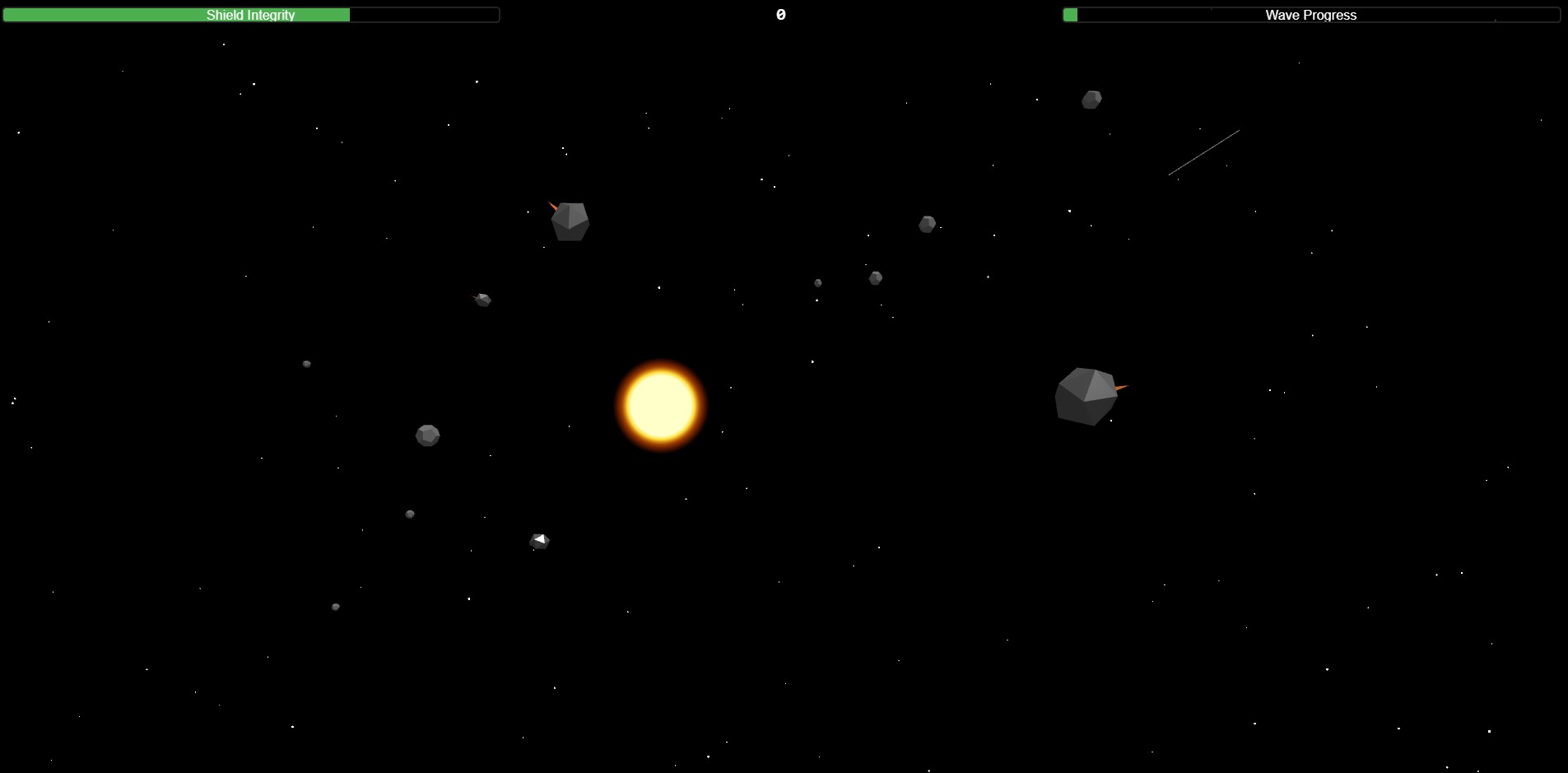
Resource management is just as incredibly critical as accurate targeting and math. Defensive arrays require massive amounts of gigajoules to operate effectively. Firing a directed energy weapon instantly drains the capacitor reserves, demanding a meticulous and ongoing balance between aggressive offense and careful energy conservation. The application strictly penalizes panic firing. Every missed interceptor not only wastes vital power but also creates secondary orbital debris that severely complicates future radar tracking efforts. Commanders must learn to remain completely calm under the extreme pressure of incoming fire, trusting the orbital mathematics and their own precise timing to keep the planetary shield intact. The ultimate survival of the physical environment depends entirely on absolute analytical clarity in the face of absolute cosmic annihilation.

Julian D. Thorne — Celestial Mechanics Developer
Researcher and 3D engine developer focused on interactive stellar systems. Julian bridges the gap between theoretical physics and real-time browser-based cosmos exploration.


