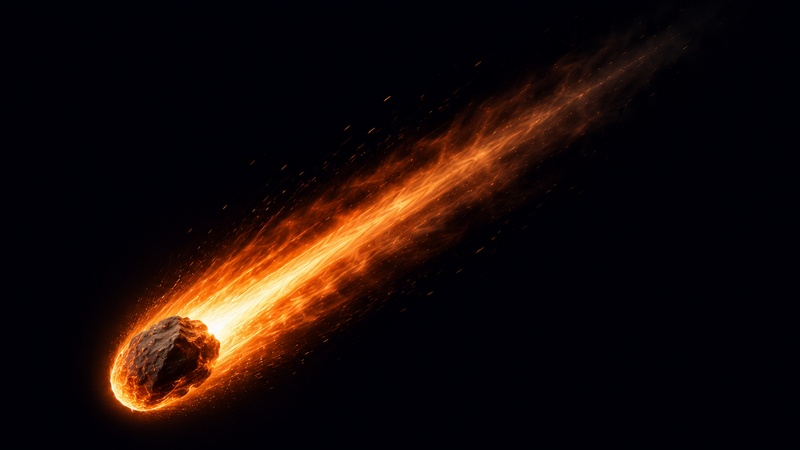
Every single day our planet moves through a vast field of cosmic debris. Millions of pieces of space rock intercept the Earth, plunging into the atmosphere at unimaginable speeds. For the average observer looking up at the night sky, this violent interaction is perceived as a peaceful and beautiful shooting star. However, the physical reality of a meteor entering the atmosphere is a spectacular display of extreme thermodynamics, fluid mechanics, and structural stress. This 3D simulator serves as a visual gateway into those violent forces, but understanding the science behind the screen requires a deeper dive into the mechanics of atmospheric entry.
Contents
From Void to Atmosphere: Defining the Projectiles
Before an object ever interacts with our atmosphere, it travels through the near-vacuum of space. At this stage, scientists refer to the object as a meteoroid. These fragments are the ancient leftovers from the formation of our solar system, ranging in size from tiny grains of sand to massive boulders measuring dozens of feet across. They drift through the darkness for billions of years until their trajectory intersects with the orbital path of the Earth.
The moment this rocky body hits the upper layers of our atmosphere and begins to glow, it earns the title of a meteor. This is the intensely bright streak of light we observe from the ground. If the object possesses enough mass, density, and structural integrity to survive the fiery plunge and actually strike the ground, the surviving remnant is classified as a meteorite. Understanding these distinctions is crucial because the simulator maps this exact transition from a cold space rock to an incandescent fireball.
The Mechanics of Atmospheric Entry and Ram Pressure
A common misconception regarding falling space debris is that the intense heat is caused by atmospheric friction. While friction plays a minor role, the primary engine of destruction is ram pressure. When a meteoroid enters the atmosphere at speeds exceeding 25,000 miles per hour, the air directly in front of it simply cannot move out of the way fast enough. The incoming object violently compresses the atmospheric gases ahead of it.
According to the basic laws of thermodynamics, compressing a gas causes its temperature to rise. Because the compression happens so rapidly and with such extreme force, the air temperature immediately in front of the meteor spikes to thousands of degrees. This creates a brilliant, superheated envelope of glowing plasma known as a shock wave. The kinetic energy of the meteor is rapidly converted into heat and light. We can express the total kinetic energy available for this conversion with a straightforward formula:
E = 0.5 * m * v2
In this relationship, E represents the kinetic energy, m stands for the mass of the object in pounds, and v is its velocity in miles per second. Because velocity is squared, even a slight increase in the speed of the incoming rock results in a massive escalation of the energy and heat generated during the entry sequence.
Thermal Dynamics and the Ablation Process
As the superheated plasma envelops the forward-facing side of the meteor, the surface of the rock begins to melt and vaporize. This material removal process is called ablation. The extreme heat essentially boils away the outer layers of the cosmic projectile. The molten droplets and vaporized minerals are then blown backward by the rushing wind, creating the glowing tail that stretches for miles across the sky.
☄ Ablation is a double-edged sword. On one hand, it rapidly reduces the mass of the meteor, causing it to shrink. On the other hand, the vaporizing material carries heat away from the main body, acting as a natural heat shield. This is the exact same physical principle used by engineers when designing the heat shields for returning spacecraft. The rate at which the mass is lost depends heavily on the atmospheric density, the speed of the object, and the specific heat capacity of the material.
The mass loss rate can be approximated using the following relationship:
dM/dt = – A * p * v3 / 2Q
Here, dM/dt is the rate of mass loss, A is the cross-sectional area, p is the atmospheric density, v is the velocity, and Q is the heat of ablation specific to the rock type. Different materials handle this intense furnace in very different ways.
Meteorite Composition Profiles
| Meteorite Classification | Primary Composition | Average Density lb/ft3 |
|---|---|---|
| Stony Chondrites | Silicate minerals and rocky materials | 180 to 220 |
| Iron-Nickel | Solid metallic iron and nickel alloys | 450 to 500 |
| Carbonaceous | Carbon-rich compounds and water-bearing minerals | 100 to 140 |
Velocity, Drag, and Aerodynamic Stress
The survival of a meteor depends heavily on its entry velocity and the angle at which it strikes the atmosphere. Meteors hit the Earth at speeds ranging from a minimum of 25,000 miles per hour up to a staggering 160,000 miles per hour. A shallow angle of entry means the meteor spends more time in the thin upper atmosphere, slowly shedding speed and burning away. A steep, vertical angle causes the object to slam directly into the thickest, lowest layers of air, resulting in massive aerodynamic stress.
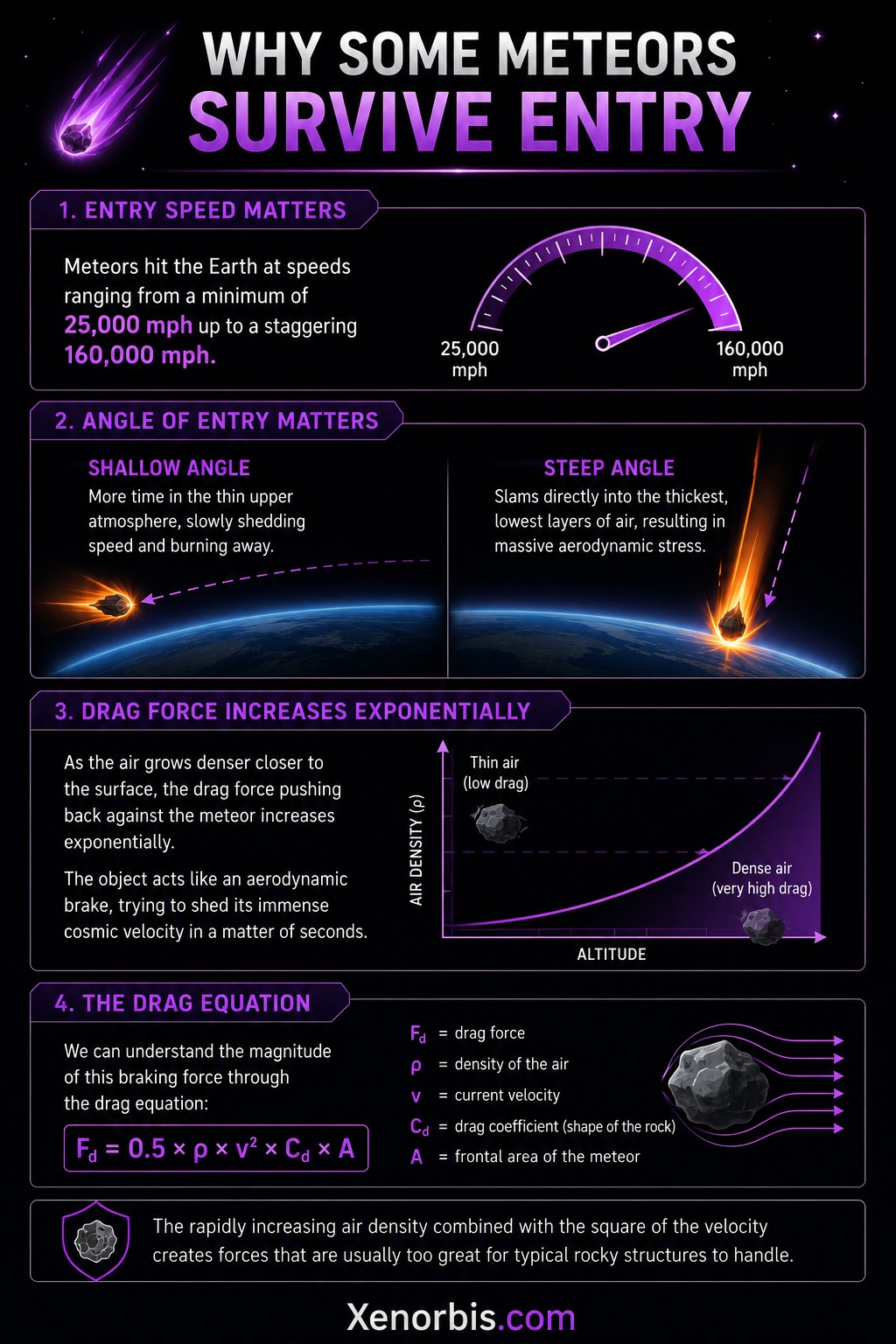
As the air grows denser closer to the surface, the drag force pushing back against the meteor increases exponentially. The object acts like an aerodynamic brake, trying to shed its immense cosmic velocity in a matter of seconds. We can understand the magnitude of this braking force through the drag equation:
Fd = 0.5 * p * v2 * Cd * A
In this equation, Fd is the drag force, p is the density of the air, v is the current velocity, Cd is the drag coefficient based on the shape of the rock, and A is its frontal area. The rapidly increasing air density combined with the square of the velocity creates forces that are usually too great for typical rocky structures to handle.
The Physics of Airbursts
When the aerodynamic drag pushing against the front of the meteor exceeds the internal tensile strength of the rock, catastrophic structural failure occurs. The meteor cracks and shatters. In an instant, what was once a single solid object becomes thousands of smaller fragments. This sudden fragmentation drastically increases the total surface area exposed to the rushing air.
Because the drag force is directly proportional to the cross-sectional area, this sudden expansion causes the entire mass to decelerate all at once. The remaining kinetic energy is dumped into the atmosphere in a fraction of a second, resulting in a massive explosion known as an airburst. The shockwave from an airburst can be devastating, flattening forests and shattering windows miles away, even though no physical rock actually struck the ground.
Significant Historical Impact Events
| Historical Event | Location and Impact Type | Estimated Energy Yield |
|---|---|---|
| Tunguska Event of 1908 | Siberia, massive atmospheric airburst | 10 to 15 Megatons |
| Meteor Crater Formation | Arizona, direct ground impact by iron meteorite | 10 Megatons |
| Chelyabinsk Event of 2013 | Russia, high-altitude airburst | 500 Kilotons |
The Dark Flight Phase
If a meteor survives the most intense heating and stress without completely vaporizing or exploding, it will eventually slow down to a point where ram pressure can no longer generate plasma. The brilliant light goes out. This marks the beginning of the dark flight phase. The object enters a period of freefall, governed solely by Earths gravity and standard aerodynamic drag, similar to a rock dropped from a high-altitude balloon.
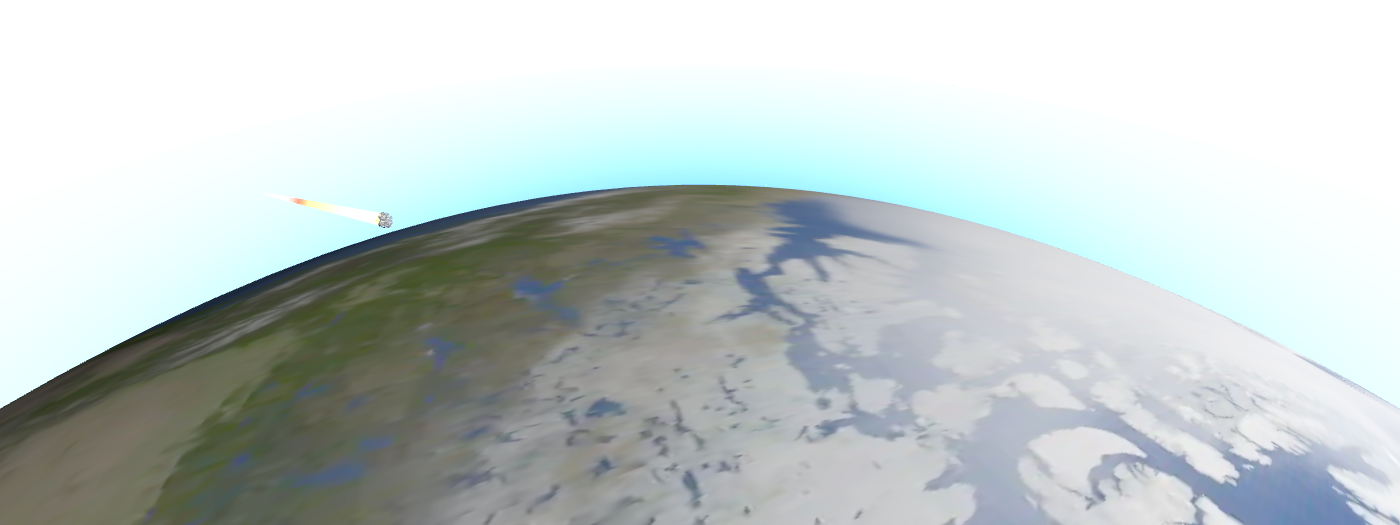
During dark flight, the intensely hot outer crust rapidly cools and solidifies into a thin, dark layer known as a fusion crust. Because the extreme heat of entry only lasts for a few seconds, the deep interior of the rock remains freezing cold, retaining the temperatures of deep space. By the time it hits the dirt, a freshly fallen meteorite might barely be warm to the touch, entirely contradicting the Hollywood trope of glowing, smoking craters.
Decoding the Colors of the Sky
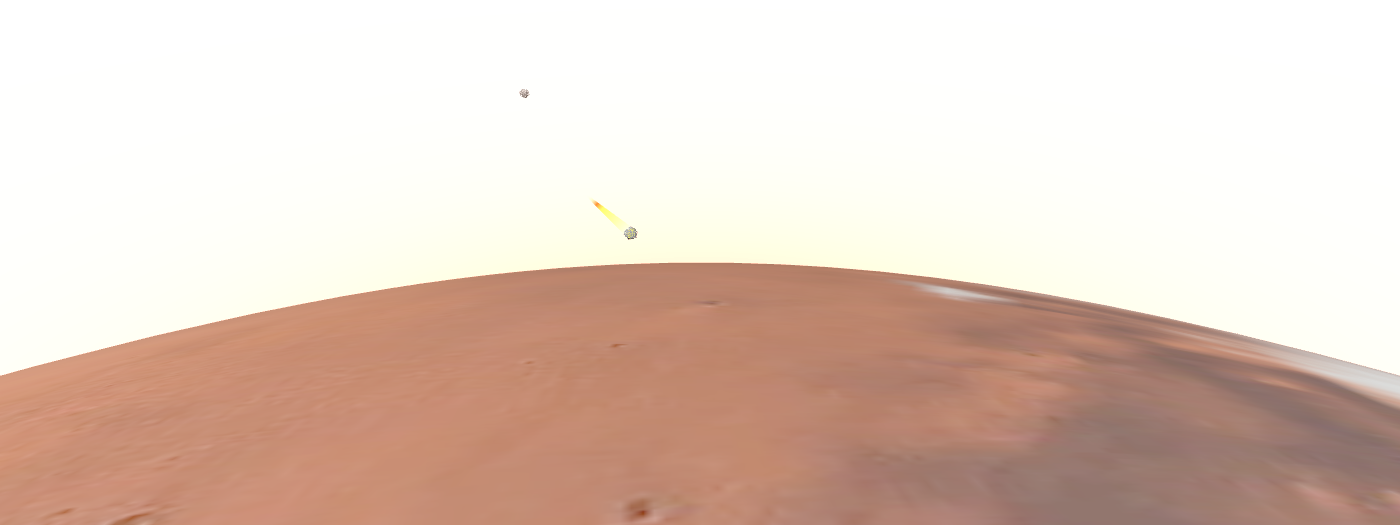
The visual spectacle of a meteor is often accompanied by brilliant flashes of color. These colors are not random optical illusions. They are the direct result of the specific chemical elements within the meteoroid and the atmosphere becoming ionized by the extreme heat. By analyzing the color of the glowing tail, researchers can make highly accurate assumptions about the composition of the invading rock.
- Bright Yellow: Indicates a high presence of iron within the rock.
- Orange and Yellowish-Red: Points to the burning of sodium.
- Vibrant Blue and Green: Typically reveals the presence of magnesium or copper.
- Deep Violet: Suggests the vaporization of calcium.
- Glowing Red: Generally results from the heating of atmospheric nitrogen and oxygen rather than the rock itself.
Atmospheric Layers and Meteor Stages
| Altitude Range | Atmospheric Layer | Meteor Activity and Interaction |
|---|---|---|
| Above 60 miles | Thermosphere | Initial collision with scattered gas molecules, early plasma formation. |
| 40 to 60 miles | Mesosphere | Peak ablation zone, maximum brightness, and tail generation. |
| Below 40 miles | Stratosphere and Troposphere | Extreme aerodynamic stress, potential for violent airbursts or dark flight. |
Planetary Defense and the Importance of Simulation
Tracking and understanding the dynamics of atmospheric entry is not just an academic exercise. It is a critical component of planetary defense. By mapping the relationship between mass, velocity, entry angle, and material strength, scientists can predict the potential damage a newly discovered near-Earth asteroid might cause. Will it burn up harmlessly, shatter miles above a city, or punch a mile-wide hole in the ground?
🌠 Tools that visualize these physics help bridge the gap between complex mathematical models and intuitive understanding. They allow us to manipulate variables and instantly see the consequences. When you adjust the density or speed sliders in the simulator, you are directly altering the drag equations and kinetic energy formulas that govern the life and death of cosmic debris.
The universe is dynamic and constantly in motion. Our atmosphere acts as an incredibly effective shield, burning away thousands of tons of incoming material every year. Understanding the violent, fiery mechanics of how that shield works gives us a profound appreciation for the fragile and protected environment we enjoy on the surface.
Recommended Reading List
- Falling Stars: A Guide to Meteors and Meteorites by Mike D. Reynolds. A comprehensive overview of where these cosmic rocks come from and how they interact with our world.
- Meteorite Hunter: The Search for Siberian Meteorite Craters by Roy A. Gallant. An exciting exploration of ground impacts and the search for surviving space rocks.
- Rocks from Space: Meteorites and Meteorite Hunters by O. Richard Norton. A deeply detailed look into the composition, origins, and physical properties of asteroidal debris.
- Asteroids, Comets, and Meteors by Ron Miller. A great fundamental resource for understanding the different types of minor bodies in our solar system.
- Impact! The Threat of Comets and Asteroids by Gerrit L. Verschuur. A sobering look at the history of cosmic impacts and the mechanics of planetary defense.

Julian D. Thorne — Celestial Mechanics Developer
Researcher and 3D engine developer focused on interactive stellar systems. Julian bridges the gap between theoretical physics and real-time browser-based cosmos exploration.


